
Why some AI newsletter ads get more clicks every week
An AI newsletter told us why one AI sponsor's clicks kept going up. Each ad led with a new benchmark result and only asked readers to take a look.
One AI sponsor's clicks in AlphaSignal kept increasing each time they sponsored. AlphaSignal is a daily newsletter for AI developers and technical professionals. Its team brought up the steady performance increase more than once, so in October 2026 we asked them why. In my words, the ads did four things.
- They read like news.
- They tied into the models people were talking about that week.
- They asked the reader to look at one thing.
- And they ran every week, with something new each time.
BuySellAds represents AlphaSignal. Its team shared these observations with us.
This is one sponsor's experience. Treat these ideas as things to test in your own newsletter ads.
How do you make an ad read like news?
It opens with a result. AlphaSignal says each ad from this AI sponsor led with a fresh benchmark result, the kind its readers already care about, so it didn't feel like a pitch.
I think people open an AI newsletter to see what changed that week: a new model, a paper, a release. If your ad starts with your product name and three adjectives, I skip it. As a reader, give me a result I can check and I might click to learn more.
Made-up example:
- Pitch: "The fastest vector database for AI apps. Start your free trial today."
- News: "We ran this month's open-weight models through the same retrieval test. Two of the smallest models beat ones far larger than them."
The finding can be a benchmark you ran, an eval on a new model, a dataset you published, a release, or something odd in your own usage data. Take your logo off the ad. If the finding on its own still gives someone a reason to click, keep it.
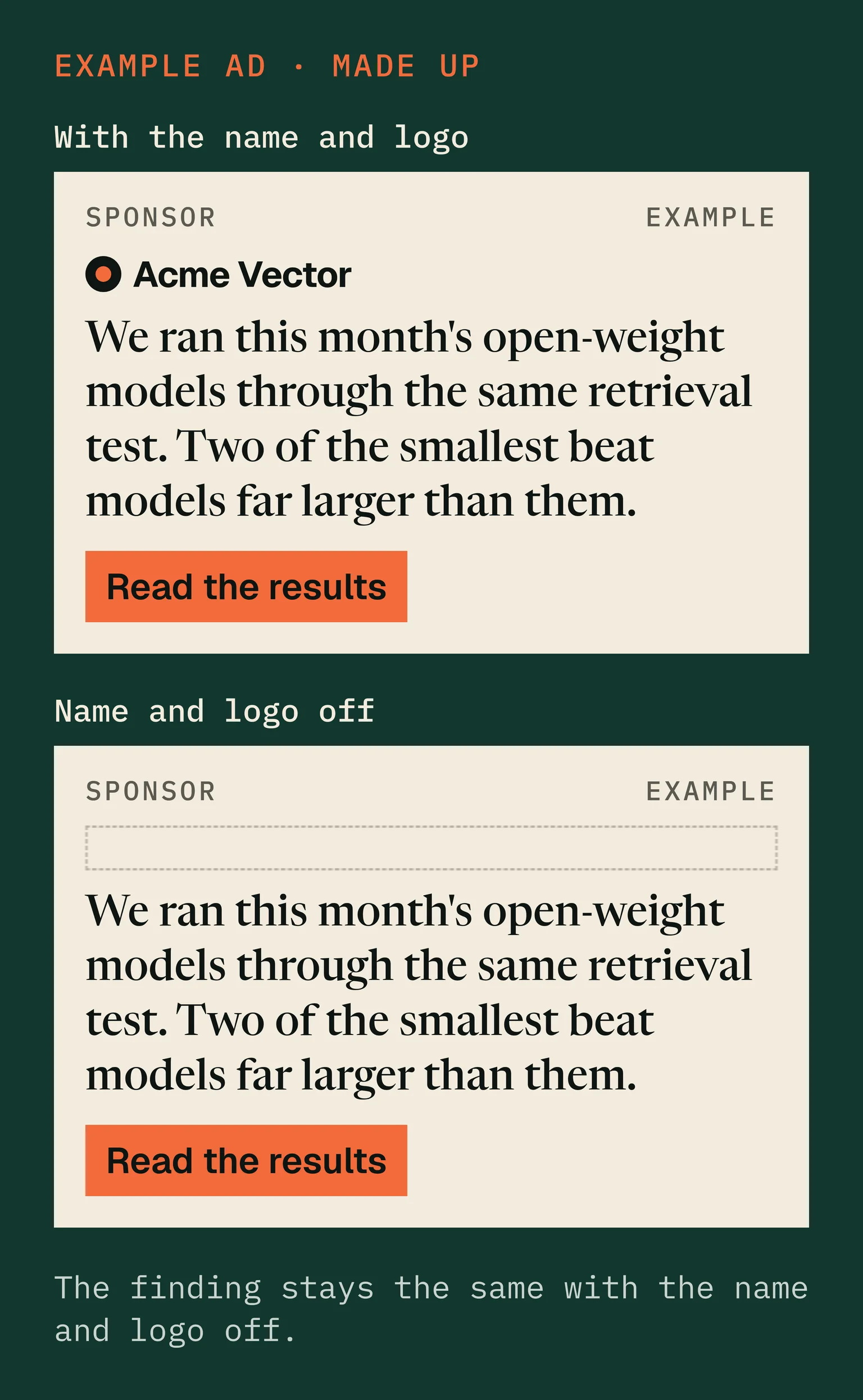
Made-up example ad. The finding and button stay the same with the name and logo off.
Why write the ad in the week it runs?
AlphaSignal says this AI sponsor tied its copy to the models people were talking about that week.
Don't lock the copy a month ahead, because the news you want to mention hasn't happened yet. I'd write or update each ad in the week it runs, and agree on a copy deadline with the newsletter before you book. Leave time for your own approvals too. If sign-off takes a week, the release you wrote about last month may already feel old by send date.
Made-up example:
- Evergreen: "See how our coding assistant handles real repos."
- Timely: "This week's new open model, run through our coding benchmark, beat last month's on the same tests."
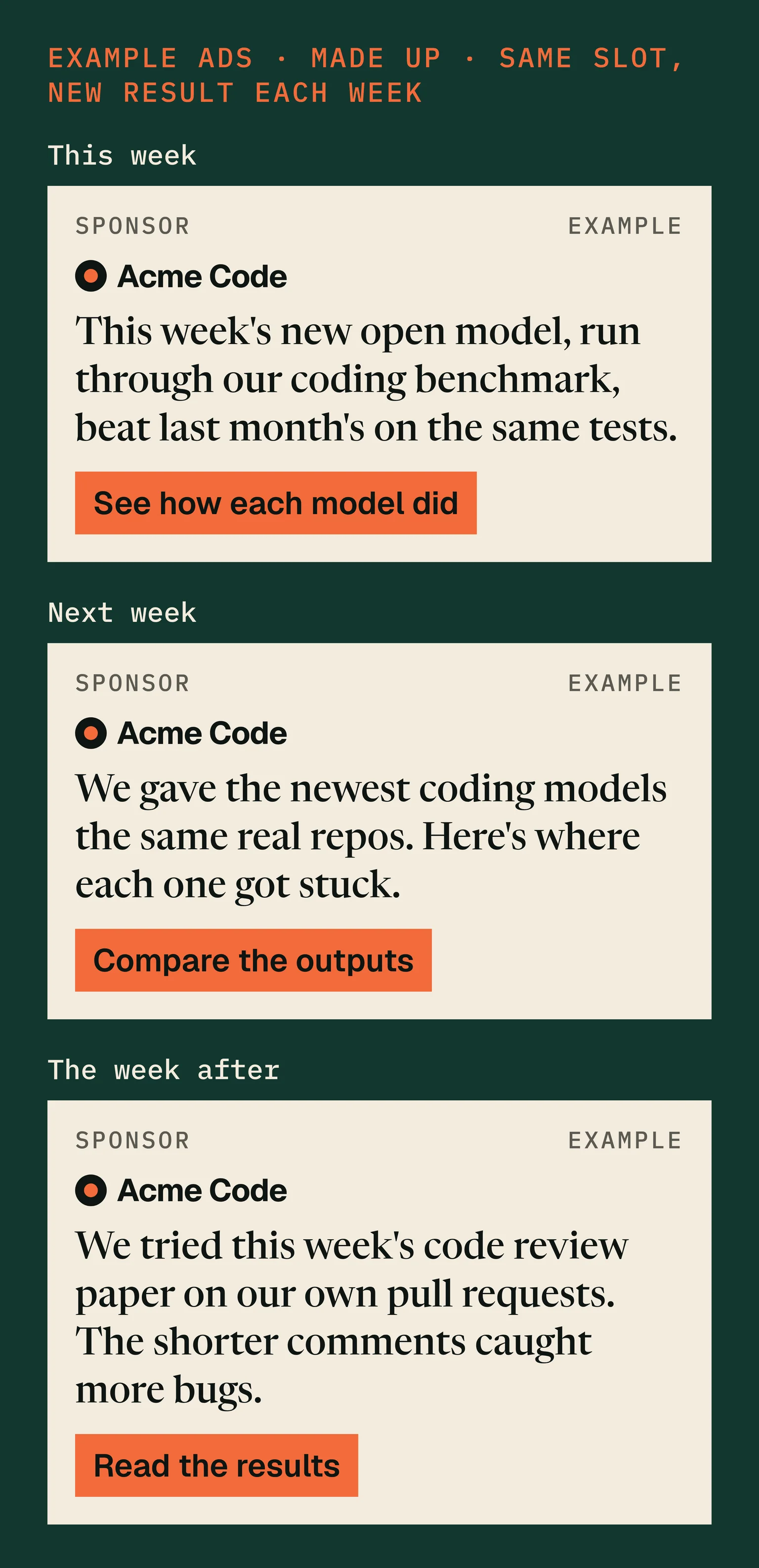
Example ads, made up. Same slot every week, with a new result each time.
Don't force it, though. If nothing that week connects to your product, lead with your own news. A stretched tie-in is worse than none, because I think readers notice when you're reaching.
What should the call to action ask for?
Just a look. The sponsor's call to action (CTA) only asked readers to look at the results.
If the ad says "see the results," I'd send the click to the results and put your product right next to them. That way people can sign up once they've seen what they came for.
A few made-up example CTAs:
- "Read the results"
- "See how each model did"
- "Compare the outputs"
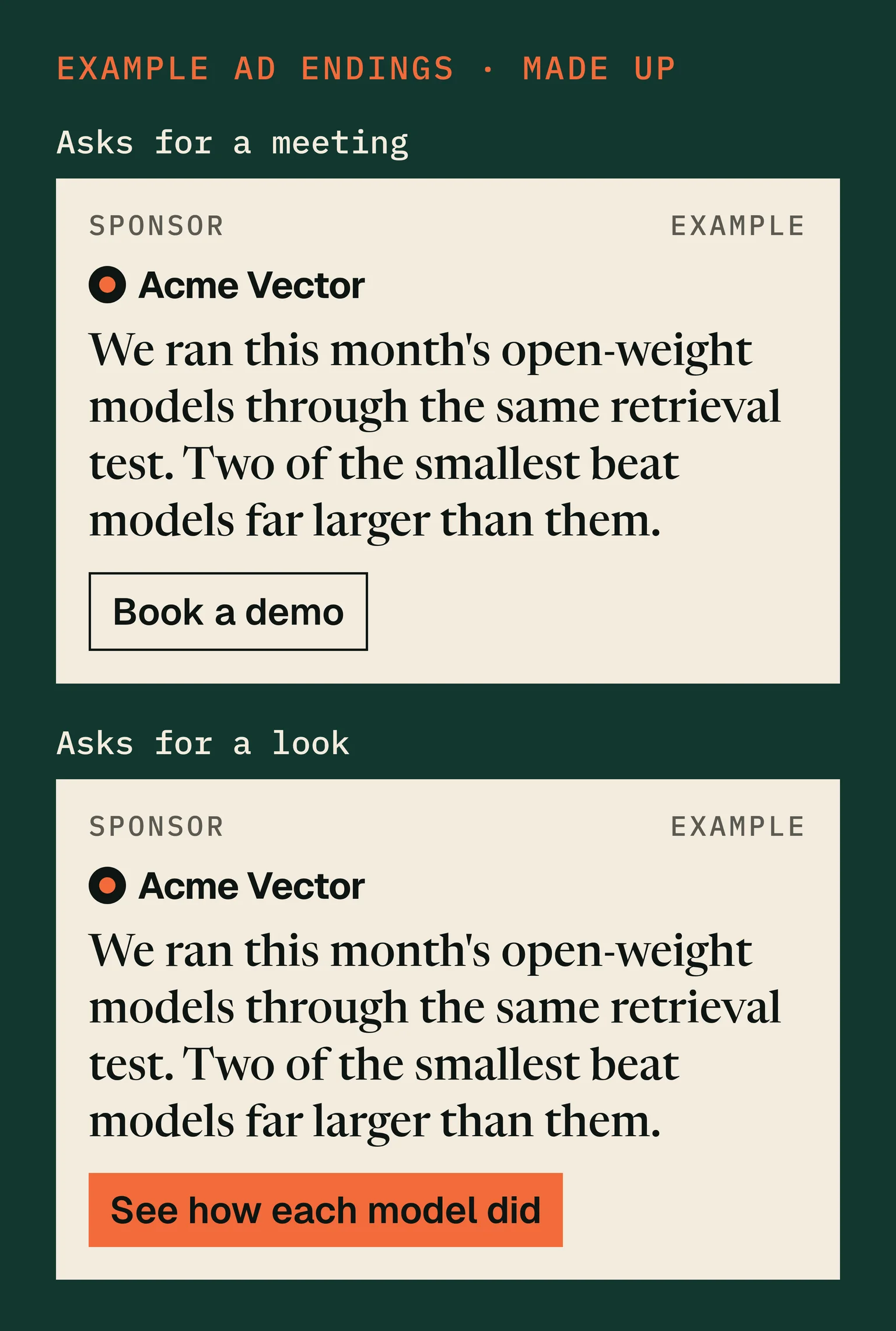
Example ad endings, made up. One asks for a meeting, the other only asks for a look.
I'd track what visitors do on your site after each ad, including whether they sign up. Lara Zakarian, our VP of Sales, covers how to measure that in how to sponsor developer newsletters.
Why run every week instead of once?
Same slot, new result, every week. AlphaSignal says this AI sponsor ran a new result every week, and its clicks kept going up.
Running ads in the same newsletter each week may help readers recognize your brand. Some people only notice an ad the second or third time they see it. A new result each week also gives last week's readers a fresh reason to click. If you run the same ad four weeks in a row, I'd expect some of them to stop looking, because they've already seen it. Update the copy each week with a result your readers can check.
If you want four weeks, write down four things you can publish in those four weeks. If you can only name two, book two. Or push the start date back until you have more.
What to have ready before you book
These seven things first:
- Pick the newsletter where your buyer reads about new models. For AI developers, AlphaSignal is one. If your buyer reads something else, start with AI newsletters for AI developers and AI leaders, which sorts the lists we book by who reads them.
- Before you book, check that you can publish a new result for each send. If you're testing that week's models, leave time to run the test and approve the copy.
- Write each ad in the week it runs, and tie it to that week's news when you can.
- Open with the finding. Your product name can come second.
- Point the link at the result itself.
- Keep the same slot each week if you can.
- Measure the campaign by what visitors do after the click, across every send.
A perspective from Roger Byrne.
Return to the Journal